Sensory activities for autistic children
Autism sensory activities for home: calming and alerting ideas with things you already have, a calm sensory break routine, and where calm games fit.
Or open the games with the calm settings already on.
Why the senses matter
Many autistic children feel sound, light, touch, taste and movement more strongly, or less strongly, than other children do. The CDC lists unusual reactions to the way things sound, smell, taste, look or feel among the signs of autism. A 2019 review of 55 studies, with 4,606 autistic people, found more over-responsivity, more under-responsivity and more sensory seeking than in typical groups. Each child has their own mix, and it changes with the day.
Seeking or avoiding
- A sensory-seeking child
- Goes looking for more: spinning, jumping, crashing into cushions, loud sounds, bright things, chewing. Strong movement and firm pressure often help this child settle.
- A sensory-avoiding child
- Wants less: covers ears, pulls at tags, refuses some foods, leaves busy rooms. Quiet, dim light and fewer choices feel safer.
- Most children
- Are some of both. One child hates the hand dryer and loves to spin. For a week, write down what your child moves toward and what they move away from. Patterns show up fast.
Calming and alerting activities
Calming activities slow the body down. Alerting activities wake it up. A child who is wound up often needs calming input. A child who seems tired or far away often needs alerting input first, then calming.
Calming
- Heavy work: push a laundry basket of books, carry the groceries, do wall push-ups.
- Deep pressure: a firm hug, if your child likes hugs, or a roll in a blanket like a burrito.
- Slow rocking in a chair or on a lap.
- A thick drink through a straw, such as a smoothie.
- Slow breaths: smell the flower, blow out the candle.
- A dim corner with a soft pillow and quiet.
Alerting
- Jumping on a cushion or a small trampoline, with a grown-up close.
- Animal walks: bear crawl, frog jumps, crab walk.
- Dancing to a fast song, then a slow one.
- A cold drink or a crunchy snack, such as carrots or crackers.
- Bubbles to chase and pop.
- A ball game of throw and catch, or kicks against a wall.
Activities with things you already have
- A rice bin: a shallow box of dry rice or pasta, a scoop and two cups. Hide small toys to find.
- Water play: a sink or tub of warm water, cups, a sponge and a funnel.
- Play dough: squeeze, roll and press. Homemade dough needs flour, salt and water.
- A pillow pile: couch cushions on the floor, to crash into or lie under.
- Sock toss: rolled socks into a laundry basket, close at first, then farther away.
- Foam on a tray: shaving foam to draw in, for a child who likes messy touch.
- A calm bottle: a clear bottle of water and glitter glue, with the lid glued shut. Shake it, then watch it settle.
Stay close with small parts, water, and anything a child might put in their mouth. Stop anything your child pulls away from.
A calm sensory break routine
A break works best before the big moment, and the same way each time. About ten minutes is plenty.
- Notice the early signs. Covering ears, pacing, a louder voice, hiding. Offer the break then.
- Show the break card. A picture says it faster than words. Our free printable visual schedule has a Calm break card and a Wait card.
- Move first, about 3 minutes. Heavy work: wall push-ups, carrying books, pushing a basket.
- Then slow down, about 5 minutes. A dim spot, deep pressure, slow breaths and quiet.
- Show what comes next. Point to the next picture on the schedule, and go back in a calm voice.
Where calm games fit
A screen does not stand in for moving and touching. It fits as one quiet choice in a break, or as the last part of one, with a play time a grown-up sets first. Liquid Pond is made with these needs in mind. The read-aloud voice starts off. Ripples and Bubbles make gentle water sounds, and one switch turns them off. Play ends with a one-minute warning and a calm goodbye.
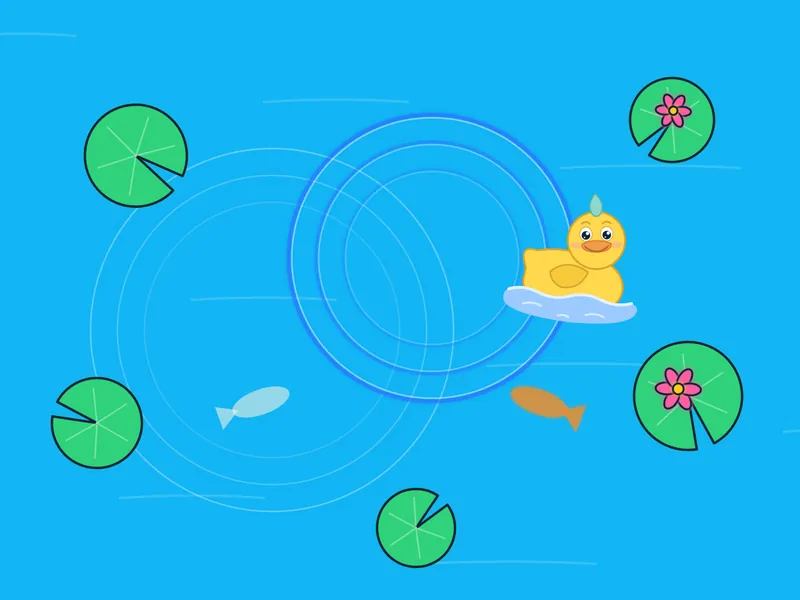
- For a child who avoids: Ripples, slow rings on a pond with nothing to win or lose. Breathe, a slow breathing guide. Fish Tank, slow fish and food to drop in. Open only these three.
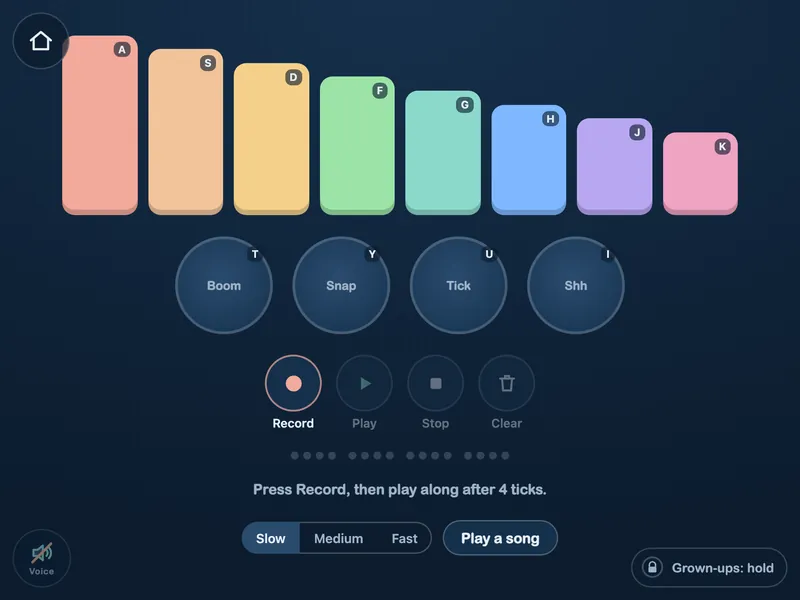
- For a child who seeks: Color Burst, a burst of color wherever a finger taps. Bubbles to pop. Music Maker, with bars and drums to play. Open only these three.

All six are part of the free games. Our page on low-stimulation games shows each sound and motion setting, and our sensory games online page has six more picks for each child.
These are everyday ideas for home. They do not replace an occupational therapist, who builds a plan around your child. Every child is different.
Sources
- Ben-Sasson A, Gal E, Fluss R, Katz-Zetler N, Cermak SA. Update of a meta-analysis of sensory symptoms in ASD: a new decade of research. Journal of Autism and Developmental Disorders 49(12), December 2019. 55 studies, 4,606 autistic people. Read the summary
- Ben-Sasson A, Hen L, Fluss R, Cermak SA, Engel-Yeger B, Gal E. A meta-analysis of sensory modulation symptoms in individuals with autism spectrum disorders. Journal of Autism and Developmental Disorders 39(1), January 2009. 14 studies. The biggest difference was under-responsivity, then over-responsivity, then seeking. Read the summary
- Centers for Disease Control and Prevention. Signs and symptoms of autism spectrum disorder. Last reviewed 5/16/2024. Read the page
Printables to go with it
The free calm-down card pack has picture cards for slow breaths, a squeeze and calm music. The free visual schedule has a Calm break card, a Wait card and a first-then strip.
See the printables, three free and one kit for $9.
Try it now
Liquid Pond has 55 calm games and activities with Puddle the duck. 30 activities are free for good, with no sign-up and no card. Nothing to install.
Play nowMore from Liquid Pond: all guides, printables, and what is inside.